

Dunbrik Waste Transfer Station
Description
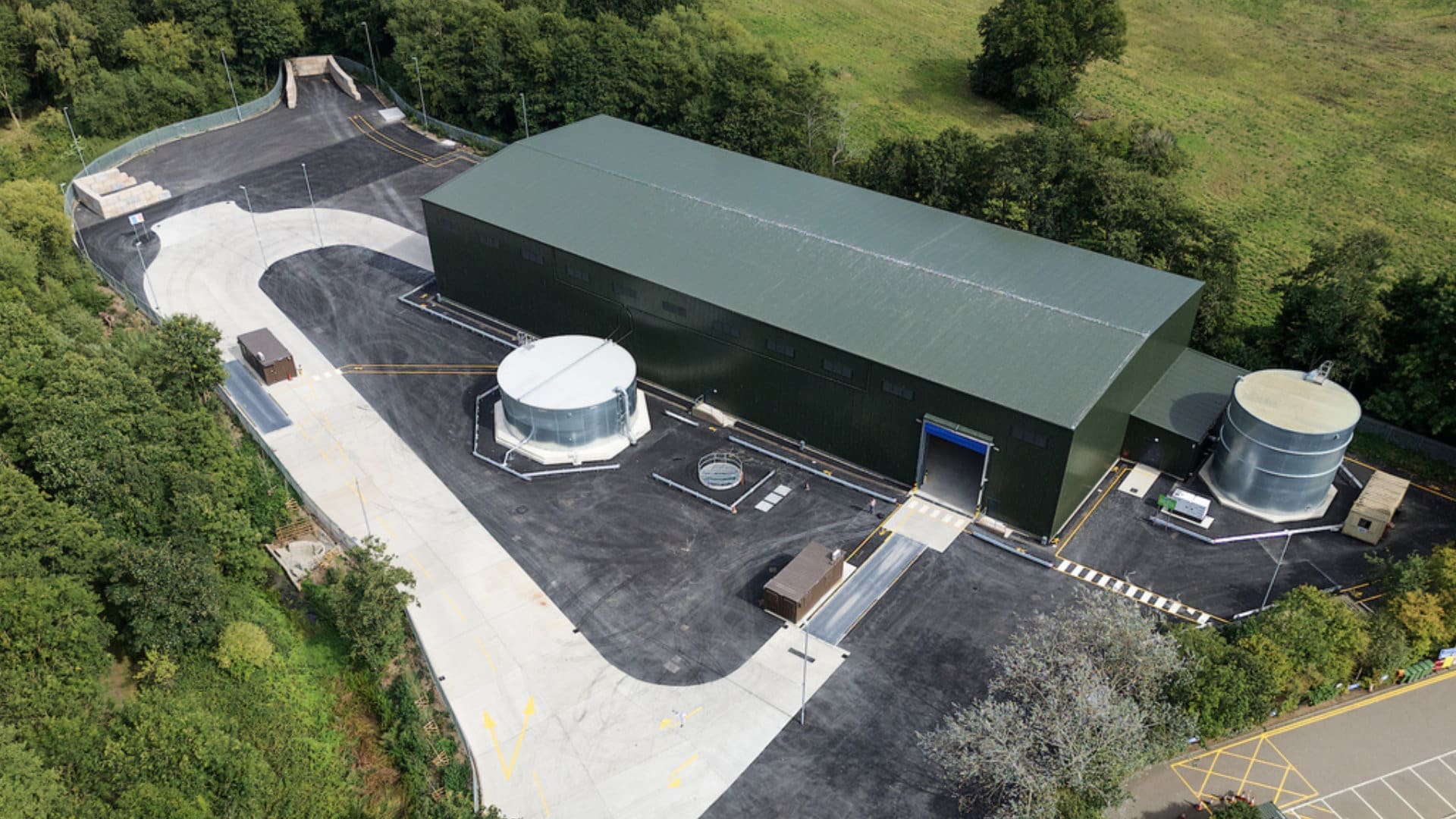
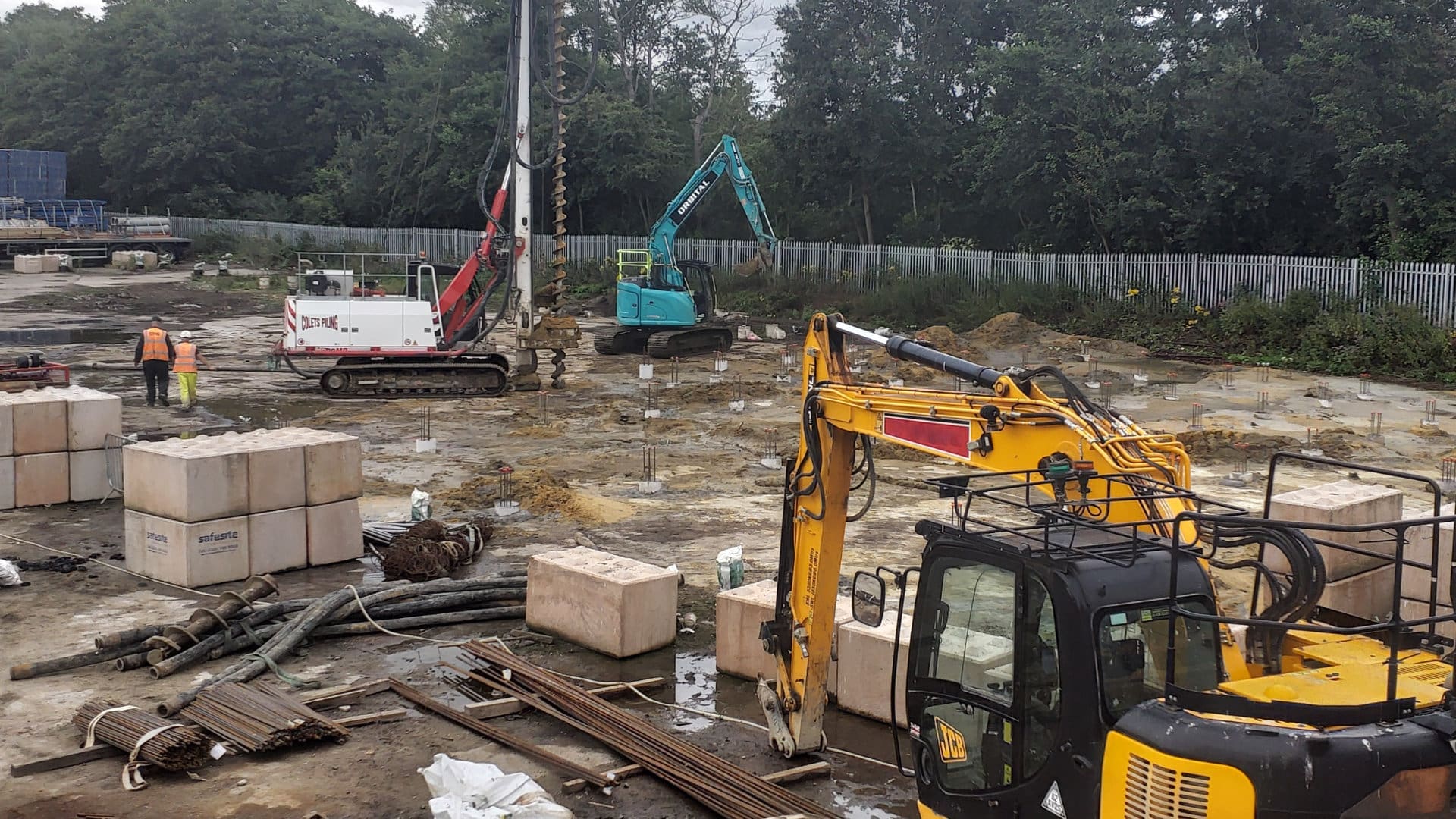
The construction of the Dunbrik Waste Transfer Station was a complex project that transformed a 75m x 30m plot into a fully operational waste management facility. The site’s development required not only a strong substructure but also intricate drainage and service systems to ensure smooth and environmentally compliant operations. From the start, the project demanded careful planning to accommodate the scale and demands of the station’s daily use.
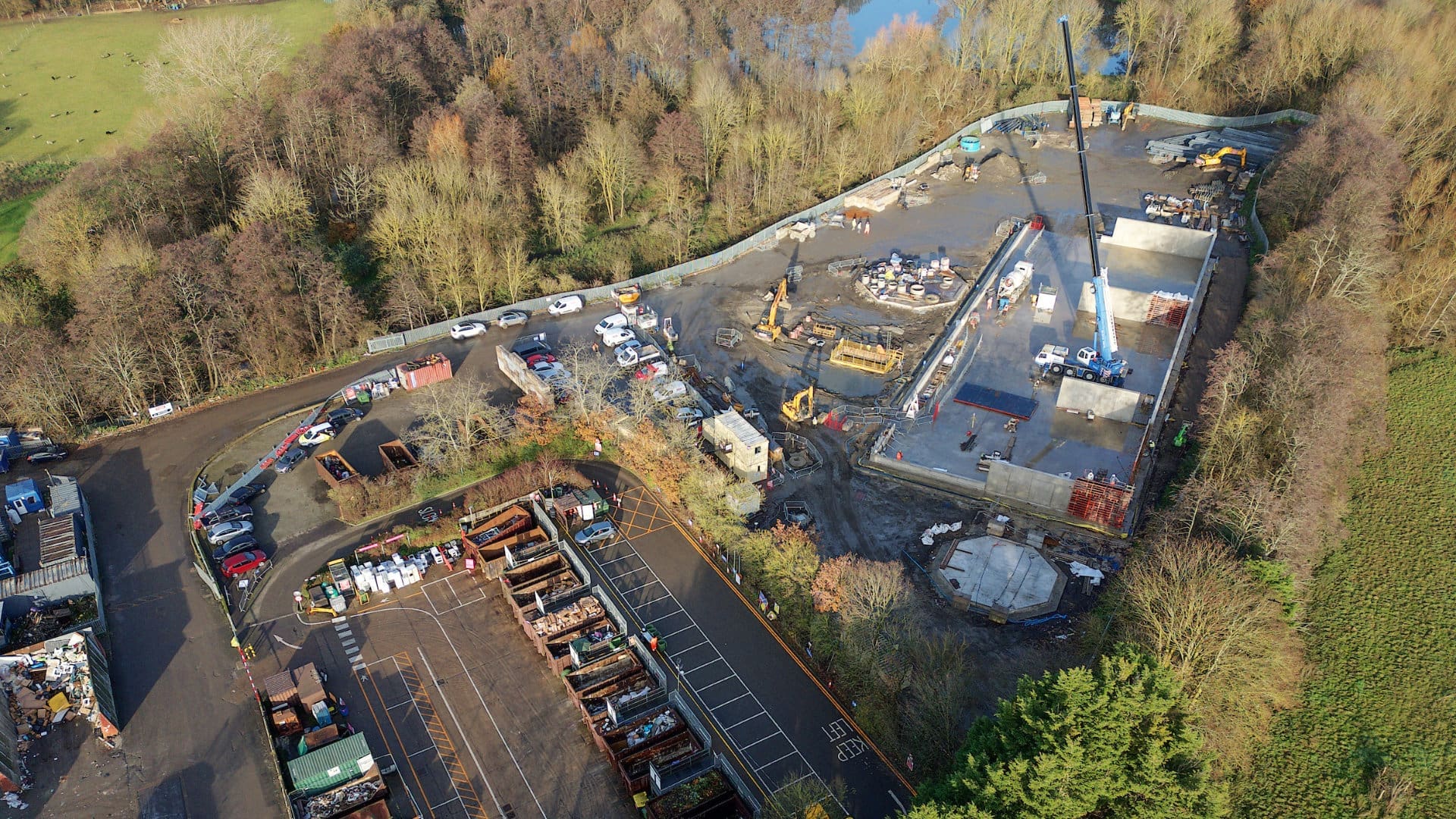
The foundation work began with extensive excavation and grading to prepare the site. As ground gas was a potential risk, a gas pipework system was installed beneath the surface, designed to safely vent any emissions away from the structure. With the ground stabilized, the focus shifted to laying a reinforced concrete slab that would form the backbone of the building. This slab, designed to handle the immense weight of the steel frame, also embedded holding down bolts to secure the structural columns, ensuring the frame could withstand the pressures of heavy-duty equipment and waste operations.
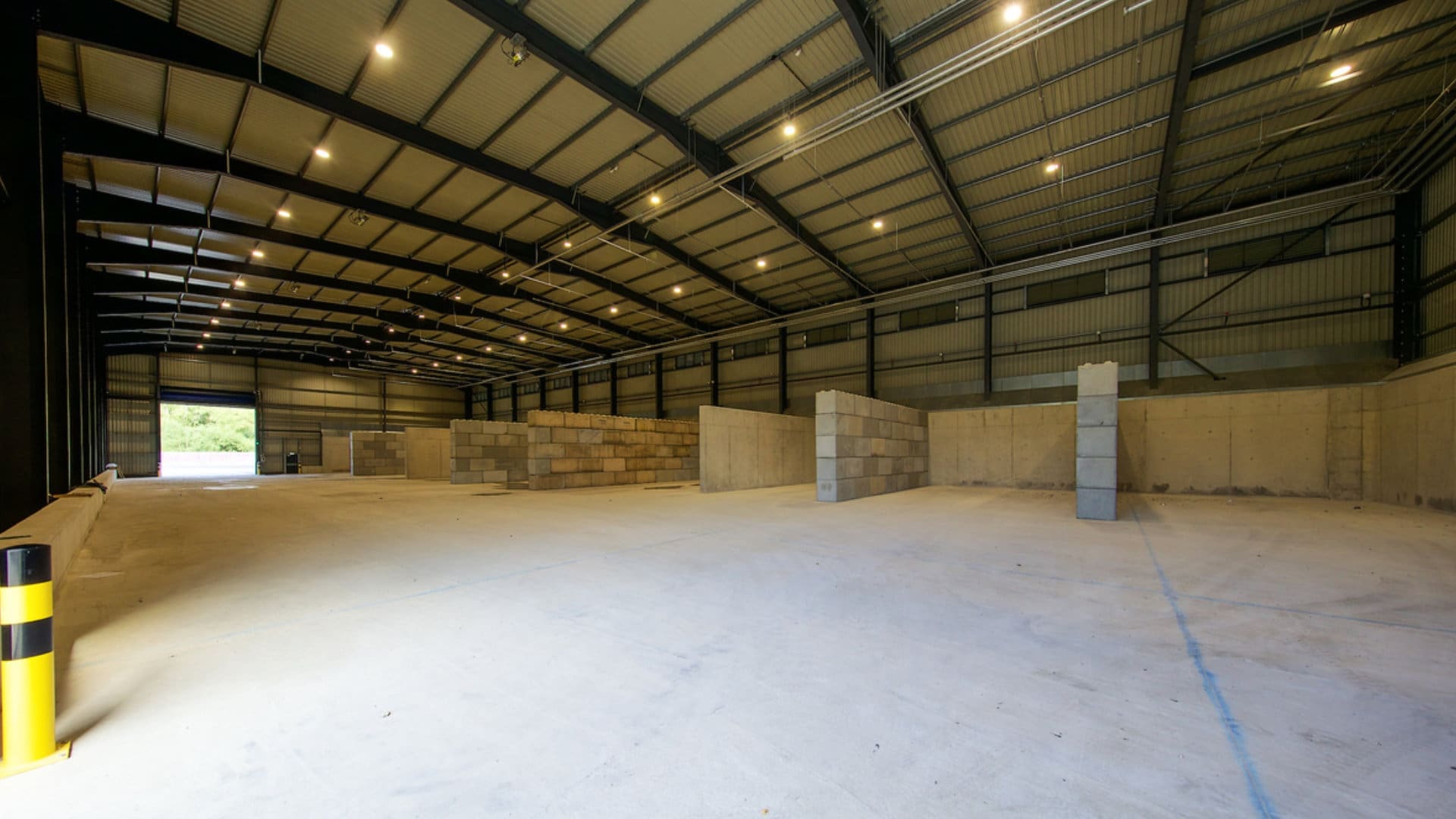
On the perimeter of the building, reinforced concrete push walls 4.2 meters high were constructed. These walls will serve a crucial role in the facility’s operations, allowing heavy machinery to push large volumes of waste against them without damaging the structure. Additional 1.2-meter-high barrier walls were also erected to protect restricted areas. To further safeguard the structural integrity, a 200mm thick fibremesh sacrificial slab was added in areas subjected to the most wear, providing a durable layer that could be easily replaced when necessary.
Surface water management was a key concern throughout the project. The waste transfer station, with its vast impermeable surfaces, needed an efficient drainage system to prevent flooding and environmental contamination. The surface water drainage system was designed to capture rainwater from the site through a network of drains and manholes. One of the critical components was the Toggleblok valve pit, a safeguard against accidental spills, which could isolate sections of the system. To further protect the surrounding environment, a petrol interceptor was installed to filter out hydrocarbons before water entered the natural waterways. The surface water was collected and pumped through a specialized chamber to higher points on-site, and finally directed to an above-ground attenuation tank. This tank, in turn, controlled the water flow into the River Darenth via a headwall, reducing the risk of erosion or overwhelming the river during storms.
Managing wastewater from the station required its own solution. The foul water drainage system included a pump chamber, which collected the wastewater and transported it through a rising main to the municipal sewer system. This ensured that the station’s operations could run without polluting local groundwater or causing blockages.
In addition to the drainage systems, an extensive service duct network was installed across the site. This network housed the power and communication lines necessary to keep the facility running efficiently. One major part of the service installation was the construction of a new substation. This substation ensured that the waste transfer station had sufficient power to meet its energy needs, especially given the heavy machinery and lighting required on-site.
As part of the operational infrastructure, two weighbridges were constructed. These weighbridges were vital to the facility’s logistics, accurately measuring the weight of vehicles entering and leaving with waste. Their substructures were carefully constructed, with reinforced concrete slabs providing a stable base for the weighing platforms. Foundation slabs were also poured for the welfare facilities, where staff would take breaks or manage the station’s operations from office spaces.
With the building and operational elements in place, the final stages of the project focused on access and external roadways. A brushed finish concrete road was constructed, offering a durable surface with enough texture to prevent vehicles from skidding, especially under wet conditions. For the external areas, a tarmac overlay was applied, ensuring smooth transitions between different parts of the site and optimizing vehicle movement.
In the end, the Dunbrik Waste Transfer Station came together as a robust, well-thought-out facility. The combination of reinforced substructures, advanced drainage systems, and durable surface treatments ensured that the site was not only functional but also sustainable for the long term. Each element of the construction played a role in supporting the station’s demanding operations, while also safeguarding the environment around it.
Details
- Contract: Dunbrik Waste Transfer Station
- Client: Darenth River Ballast Company Ltd
- Location: Kent
- Value: £3.3m Duration: 60 weeks
- Scope: Groundworks, Building Substructure, Drainage, Roads & Hardstandings